















Japanese geta: everything you need to know about the traditional wooden sandal
With their wooden soles resting on two "teeth" and the little karan-koron they make with every step, Japanese geta are instantly recognizable. But where do they come from, what are the different styles, and above all, how do you wear them without twisting your ankle? Here is our complete guide to everything you need to know about the geta, the traditional sandal of Japan.
In short
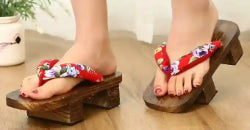
The geta (下駄) is a Japanese wooden sandal consisting of a flat sole, the dai, resting on two teeth (ha), and a V-shaped fabric strap, the hanao, which passes between the big toe and the second toe. It is mainly worn barefoot with a yukata in summer, or with tabi socks. Do not confuse it with the zori, which is flat and dressier, and worn with ceremonial kimono.
Table of Contents
What is a geta?
The word geta is written 下駄 in Japanese: the first character, ge, means "down, below", the second, ta, designates the shoe. It is the oldest traditional Japanese shoe still worn today: the oldest wooden sandals found in Japan date back to the Yayoi period, about 2,000 years ago. To go further back in time, read our article on the history of Japanese geta.
A geta consists of three elements:
- The dai (台): the sole, carved from a lightweight wood, most often kiri (paulownia), sometimes cypress hinoki or cedar sugi.
- The ha (歯): literally the "teeth", two wooden blocks under the sole that elevate it.
- The hanao (鼻緒): the fabric strap, fastened at three points, which holds the foot between the big toe and the second.

Originally, this height had a very practical function: to keep the feet and the hem of the kimono away from mud, rain, and snow. This is also what explains their very particular silhouette, which we detail in our article where the shape of geta comes from.

The different types of geta
There is not just one geta, but a whole family of wooden sandals, each designed for a specific use. Here are the main ones:
| Type | Feature | For whom, for what? |
|---|---|---|
| Ni-mai-ba geta | Two teeth, the most classic shape | Everyone, with a yukata or jinbei |
| Hiyori geta | Low teeth, thin sole | Good weather, walking in town |
| Ama-geta / taka-geta | High teeth, often with a toe guard (tsumakawa) | Rain; formerly also cooks and fishmongers, to stay dry |
| Tengu-geta (ippon-ba) | One central tooth | Mountain monks yamabushi; today for balance training |
| Okobo (pokkuri) | High, hollowed-out wooden block, often lacquered | Maiko, apprentice geishas of Kyoto |
Tengu-geta takes its name from the tengu, a mountain creature from Japanese folklore, often depicted wearing these one-toothed sandals. As for okobo, they are often referred to as "geisha shoes": in reality, only apprentices wear them. To learn more about their world, discover our article what is a geisha.
Geta, zori, okobo: what are the differences?
They are often confused, yet these three Japanese shoes are worn neither with the same outfit nor on the same occasions:

| Criterion | Geta | Zori | Okobo |
|---|---|---|---|
| Sole | Wood, elevated by two teeth | Flat: straw, fabric, leather or vinyl | High, hollowed-out wooden block |
| Style | Casual | Dressy | Ceremonial |
| Outfit | Yukata, jinbei, everyday kimono | Ceremonial kimono | Maiko kimono |
| On the feet | Barefoot or tabi | White tabi | Tabi |
| Season | Mainly summer | All year round | All year round |
Are you looking for the right pair for a specific outfit? Our guide what shoes to wear with a kimono helps you choose, and our article on the names of traditional Japanese shoes covers all the others.
Our selection of Japanese geta
 Traditional Japanese Geta
€92.99
 Comfortable Japanese Geta for Men
€69.99
 Japanese Geta with Heel for Women
€97.99
How to wear and walk in geta
Geta require a few minutes of adjustment, but once you get the hang of them, they are surprisingly comfortable. Here is how:
- 1Loosen the hanao before the first outing: massage and gently stretch the strap with your fingers so it fits your foot.
- 2Slide your foot in by placing the strap knot between your big toe and second toe, without pushing it all the way in.
- 3Let your heel hang over: traditionally, it should protrude 1 to 2 cm from the back of the sole. This is intentional, and it is what gives you a light step.
- 4Take small steps, keeping your knees slightly bent. Your weight should first go on the front tooth, then on the back tooth.
- 5Do not drag your feet: lift the geta with every step. This is also what produces the famous karan-koron.
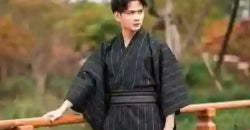
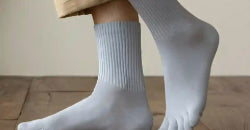
In terms of outfit, geta are worn barefoot with a yukata in summer, or with Japanese tabi socks as soon as temperatures drop. They also pair very well with the jinbei, the Japanese summer outfit, and many simply adopt them as lounge sandals. They are even said to have some positive effects on posture: we talk about them in our article on the benefits of Japanese geta.
How to choose your geta
1. Size
Measure the length of your foot and compare it to the size guide for each model. For traditional wear, keep in mind that the heel extends slightly: if you are between two sizes, the smaller one is often the right choice. If you prefer your entire foot to rest on the sole, choose the size that corresponds to your foot length.
2. Height
For beginners, opt for low teeth (2 to 4 cm) or a flat sole: walking is more stable. Tall models and tengu-geta are reserved for experienced wearers.
3. Wood and strap
Paulownia is the premier wood for geta: very lightweight, it absorbs moisture. As for the strap, a padded hanao is gentler on the toes. Finally, colors and patterns reflect your style: natural wood and a dark strap for a understated look, floral patterns for a more festive summer outfit.
| Your use | Our advice |
|---|---|
| First pair, at home or in summer | Low-tooth or flat geta, padded strap |
| With a yukata for a festival | Classic ni-mai-ba geta, natural wood |
| For men, everyday wear | Wide sole, dark strap |
| For a more feminine style | Heeled model or floral patterns |
Find your Japanese geta
Over 80 models for men, women, and children, from classic natural wood to floral designs.
View Japanese getaFrequently asked questions about geta
What does the word "geta" mean?
Geta is written as 下駄: ge means "down, below" and ta refers to the shoe. The word refers to raised Japanese wooden sandals.
What are geisha shoes called?
Apprentice geishas (maiko) wear okobo, also called pokkuri, which are tall sandals made of hollowed-out wood. Established geishas usually wear zori with tabi.
What are Japanese clogs called?
Flat Japanese sandals are called zori; those with leather soles are setta. Raised wooden models are geta.
What is the difference between a geta and a zori?
A geta has a wooden sole resting on teeth and is worn with casual outfits like a yukata. A zori is flat, more formal, and accompanies ceremonial kimono with white tabi.
Can you wear geta with socks?
Yes, with tabi socks, which separate the big toe from the other toes. In summer and with a yukata, they are usually worn barefoot.
Are geta comfortable?
After a short adjustment period, yes: paulownia wood is lightweight and the strap molds to the foot. To start, choose low teeth and a padded strap.