


























































What is the history of Japanese geta?

Source: Freepik
Japanese geta embody the perfect blend of functionality and tradition. Appearing as early as the Edo period, they elegantly complement kimonos and yukatas. Their raised structure protects feet from dampness and muddy ground. Find everything you need to know about Japanese geta in this review.
Japanese Geta: Origin and History
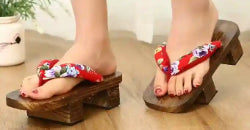
The first raised sandals appeared in Japan as early as the 6th century, influenced by models from China and Korea. Initially designed to protect feet from muddy and damp ground, they quickly found their place in daily life. Artisans began experimenting with different shapes and materials, gradually transforming the sandal into an object that was both practical and aesthetic. Over the centuries, geta became an indispensable accessory for all social classes, from peasants to samurai, while reflecting the status and elegance of each wearer.
During the Edo period, the popularity of geta reached its peak. The supports and straps diversified according to:
- regions;
- seasons; and
- occasions.
Women's models were often decorated with refined patterns, while men's versions favored robustness and simplicity. This period marked the evolution of geta from a simple utilitarian tool to a strong cultural symbol. Today, geta continue to represent Japanese heritage, incorporating traditions while inspiring contemporary fashion. They embody the balance between functionality and refinement, testifying to Japan's history and craftsmanship.
What is the manufacturing method for Japanese geta?
The making of Japanese geta relies on precise artisanal expertise, passed down through several generations. Wood is chosen for its lightness and strength. Each block is cut and carefully polished to obtain a pleasant and smooth surface. The supports, called ha, are then attached to the platform using pegs and natural glue. This step ensures the necessary stability and comfort for walking. Respect for dimensions and balance is essential for the sandal to retain its functionality and traditional aesthetic.
The strap, or hanao, completes the structure of the geta and is attached at three points on the platform. It is hand-woven with various fabrics, often decorated with traditional patterns or colored according to the season. To make a geta, certain specific steps enrich the process. This involves:
- drying the wood for several weeks;
- testing the balance of the sandal before installing the strap;
- adjusting the platform's inclination to improve natural posture; and
- lightly varnishing the surface to strengthen protection against wear.
This meticulous work reflects a solid artisanal heritage, where every detail contributes to the quality and authenticity of Japanese geta.
What are the types of Japanese geta?
Japanese geta come in several models, each adapted to a specific use and a particular cultural context. Their shape, height, and materials vary according to traditions and daily needs. Here are the different types of Japanese geta in the table below.
|
Geta Type |
Main Characteristics |
Usage |
|
Classic Geta |
Wooden sole with two supports (ha) and fabric strap |
Daily wear with yukata |
|
Okobo |
Very high, thick platform, often lacquered |
Worn by maiko (apprentice geisha) |
|
Tengu geta |
Single central tooth, atypical design |
Used for training and balance |
|
Ashida |
Three supports instead of two, better stability |
Suitable for wet terrain |
|
Modern Geta |
Sole sometimes made of rubber, improved comfort |
Contemporary urban use |
How to wear and walk with Japanese geta?
Using Japanese geta requires some adaptation to ensure comfort and stability. The foot is positioned slightly forward on the sole, leaving a small space at the heel. This position helps balance the body's load and prevents any discomfort when moving. The strap, called hanao, should hold the foot without compressing it, to maintain a natural sensation. A measured pace promotes balance and limits the impacts related to the wood's contact with the ground. This creates a characteristic gait, both stable and controlled.
Learning is based on simple gestures that progressively improve ease. Regular practice allows for the adoption of a fluid and comfortable gait in daily life. To walk well in geta, you need to:
- keep your back straight to improve overall stability;
- take short steps to better control balance;
- place your foot flat to avoid imbalances; and
- choose the right size to limit friction.
These principles contribute to a more natural and secure walk. Japanese geta thus influence posture and encourage a controlled gait, in harmony with their traditional design.
Where to get Japanese geta?

Source: Freepik
Finding authentic Japanese geta requires careful attention to the quality and origin of the products. Boutiques specializing in Japanese craftsmanship offer models made using traditional methods. In certain Japanese cities like Kyoto or Tokyo, workshops perpetuate this savoir-faire by offering handmade sandals. These establishments favor noble materials and careful assembly, guaranteeing superior durability. Purchasing in person also allows one to benefit from precise advice regarding size and the choice of models adapted to specific uses.
Online platforms now offer an accessible alternative for acquiring Japanese geta without traveling. Many specialized sites showcase varied collections. It remains essential to verify the origin of the products and the quality of the finishes before ordering. Some sellers provide detailed properties and precise images, thus facilitating the choice. Recognized marketplaces and boutiques dedicated to Japanese culture are reliable options for finding geta that combine comfort, aesthetics, and respect for traditions.