




































What kind of paper is used for Japanese lamps?

Japanese lamps captivate with their soft light and timeless charm. Behind their discreet glow lies an essential element: paper. But what type of paper gives them this magic? Discover in this review the paper used to make Japanese lamps.
What kind of paper is used for Japanese lamps?
The paper used for Japanese lamps is washi paper, an ancient material made from natural fibers. Designed for over 1,300 years, it comes mainly from the paper mulberry tree, called kôzo, but also from mitsumata or gampi.
Its fine texture, both flexible and resistant, allows light to be diffused with incomparable softness. Unlike industrial paper, Japanese washi lets light pass through while obscuring the source, thus creating a cozy and warm atmosphere.
It is also appreciated for its durability, as it resists tearing and yellowing. These qualities make it a preferred choice for handmade Japanese lamps, whether suspended or freestanding. Washi paper embodies the perfect balance between strength and transparency, between tradition and modernity.
How to make Japanese lamps?
The manufacture of a Japanese lamp relies on a delicate balance between craftsmanship and precision. The choice of washi paper is central. It must be both flexible enough to fit the structure and strong enough to last over time. Natural fibers from the paper mulberry tree or mitsumata offer this unique combination. The process begins with the preparation of the paper, moistened to facilitate its shaping. The frame, often made of bamboo or fine metal, is then carefully covered, with each fold and tension of the sheet adjusted to create a smooth and uniform surface.
Once the base is formed, the lamp moves on to the finishing stage. Artisans sometimes add hand-painted motifs or attach decorative elements made of silk or rattan, accentuating its unique character. Air drying ensures the natural strength and beauty of the paper. Each creation then becomes a subtle balance between light and material, where Japanese paper transforms lighting into a soft and poetic ambiance. The final lamp reflects both ancestral craftsmanship and an attention to detail that makes each piece unique.
The different types of paper lamps
The world of Japanese paper lamps presents a fascinating diversity. Some are intended for temples, others adorn homes, while some adapt perfectly to contemporary interiors. Despite these variations, they share an essential element: washi paper, which diffuses a soft light and creates a harmonious and soothing atmosphere.
Japanese paper lantern

Source: Freepik
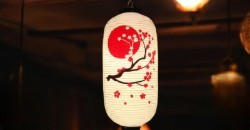
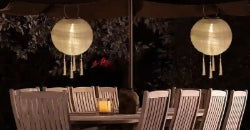
The Japanese lantern (or chōchin) is undoubtedly the most iconic. It stands as a symbol of celebration and tradition. Made from washi paper and a bamboo frame, it has adorned temples and streets during festivals for centuries.
Light dances behind the paper, creating a poetic and soothing ambiance. Each lantern often bears a calligraphic character or motif. This detail, far from being purely decorative, evokes protection and good luck. The paper, flexible but robust, allows the lantern to resist the wind while letting through a golden light, almost alive.
Traditional Andon lamp
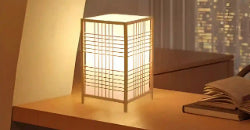
The Andon lamps once represented the lighting of Japanese homes. Their wooden structure and translucent paper bear witness to sober and elegant craftsmanship. The washi paper, stretched on each side, softens the glow and envelops the room in a peaceful clarity.
To better understand their design, here are some essential elements:
- Lightweight structure: composed of thin wooden rods ensuring stability and finesse;
- Filtering paper: chosen for its ability to diffuse light without glare;
- Artisanal finish: often reinforced with silk threads or hand-painted floral motifs;
- Contemporary use: now electric, but always faithful to the Zen spirit.
The Andon illustrates the meeting between tradition and modernity, where paper becomes a source of visual warmth and serenity.
Akari design lamp
Created by Isamu Noguchi, the Akari lamp symbolizes the perfect fusion between Japanese art and craftsmanship. Handcrafted with Gifu washi paper, it combines lightness and refinement. Noguchi saw light as an artistic material. Each Akari lamp thus becomes a luminous sculpture, both fluid and ethereal.
The soft curves of the paper, its delicate transparency, and its diffuse glow create a sense of balance. This approach has inspired many contemporary designers. Washi, in this context, transforms into an artistic element capable of expressing the beauty of simplicity. Akari lamps thus embody a philosophy where the object becomes emotion, and light, silent poetry.
Why choose Japanese lamps?

Source: Freepik
Choosing a Japanese lamp means prioritizing harmony between light and environment. These lamps, made of washi paper, diffuse a soft and natural light, which instantly transforms the atmosphere of a room. Unlike conventional lighting, they do not create glare and respect the visual rhythm. Each model combines lightness and solidity, offering both a decorative object and a soothing light source. Interiors thus benefit from a warm and serene ambiance, conducive to relaxation and contemplation.
Beyond their lighting function, Japanese lamps embody ancestral craftsmanship. The paper used reflects a balance between tradition and durability, while the bamboo or metal structure gives elegance and resistance. Their design adapts to the
- contemporary living room;
- Zen garden;
- offices; or
- reading corners.
Investing in a Japanese lamp means choosing an aesthetic, durable, and poetic object that combines art, light, and Japanese culture. Each piece becomes a central decorative element and a symbol of serenity in your home.
Washi paper remains the luminous heart of Japanese lamps. Its unique texture, both resistant and silky, transforms light into emotion. Behind each lamp, there is a craftsman, a gesture, and a philosophy: that of simple beauty, respect for the material, and pure light. Japanese lamps do not just illuminate, they tell of nature, patience, and the art of Japan. Thanks to washi, light becomes an invitation to serenity and contemplation.