






What are men's kimono trousers called?

Source: Freepik
The traditional Japanese wardrobe contains many items whose names remain little known in Europe. Among them is the men's kimono trousers. Are they simple trousers or a specific attire inherited from centuries of history? Discover in this review the name of men's kimono trousers.
Men's Kimono Trousers: What Are They Called?
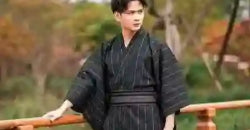
In traditional Japanese clothing, the garment worn on the legs with a men's kimono is called the hakama. This piece is distinguished by its ample cut and great elegance. It covers the lower body while giving a characteristic silhouette to traditional outfits. Hakama often accompanies ceremonies, official events, and certain martial arts practices. Its particular appearance sometimes leads to it being confused with a skirt, although it generally exists in the form of trousers with separate legs.
Men's kimono trousers hold a crucial place in Japan's history. For several centuries, nobles and samurai wore them to assert their rank and status. Even today, hakama remains associated with elegance and respect for traditions. Its design allows for great freedom of movement while maintaining a refined look. Thanks to its timeless aesthetic and cultural heritage, it remains the standard.
What Are the Other Types of Trousers for Men's Kimono?
The hakama remains the best-known garment associated with the men's kimono, but it is not the only one. Over time, several models of traditional and contemporary trousers have accompanied Japanese outfits to meet different uses. Some prioritize daily comfort, while others retain a cultural or ceremonial function. Here is a table presenting the other types of trousers for men's kimono.
|
Pant Type |
Description |
Main Use |
|
Momohiki |
Traditional fitted trousers that hug the legs |
Japanese festivals and traditional workwear |
|
Tatsuke-bakama |
A variant of hakama with narrowed legs at the ankles |
Historical reenactments and certain ceremonies |
|
Nobakama |
Loose-fitting trousers inspired by traditional hakama |
Cultural events and performances |
|
Samue |
Set consisting of trousers and a jacket |
Relaxation, meditation, and daily life |
|
Jinbei |
Lightweight outfit including short or long trousers depending on the model |
Summer season and rest periods |
|
Modern Japanese trousers |
Contemporary creation inspired by traditional Japanese cuts. |
Urban fashion and casual style |
What Can Men's Kimono Trousers Be Paired With?
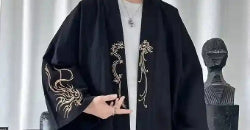
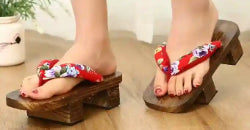
Originating from Japanese tradition, men's kimono trousers can be integrated into various outfits while maintaining their authentic character. In a traditional setting, they are usually paired with a matching kimono and a haori jacket. This combination highlights the garment's lines and respects Japanese dress codes. Sober colors are particularly appreciated during cultural events and ceremonies. Traditional footwear, such as geta or zori, often completes this ensemble harmoniously. This pairing helps preserve the elegance characteristic of Japanese clothing while highlighting its cultural richness.
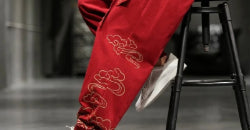
Men's kimono trousers also have a place in a contemporary wardrobe. Their volume and ample cut easily harmonize with modern pieces with simple lines. A plain shirt, a fun sweater, or a light jacket create an interesting contrast with their traditional inspiration. Natural materials reinforce the coherence of the ensemble. In a more urban context, some people pair them with discreet sneakers or minimalist leather shoes. This approach promotes an original style without excess and allows the integration of Japanese aesthetics into current fashion with elegance and sobriety.
How Much Does Hakama Cost?

Source: Freepik
The price of a hakama varies greatly depending on:
- the quality of the materials;
- the level of craftsmanship; and
- the intended use.
Entry-level models are designed to be accessible while offering a decent look for a first introduction to traditional Japanese clothing. They generally use synthetic or blended fabrics, easy to care for and suitable for occasional use or martial arts practice. Conversely, more elaborate models prioritize natural textiles and precise finishes, which increases their value.
Price differences are also explained by the manufacturing origin and the desired degree of authenticity. A hakama intended for ceremonial or traditional use costs more than a training model. Specialized workshops in Japan offer high-end pieces whose craftsmanship requires genuine artisanal know-how. You will find hakama:
- entry-level from 30 to 70 euros;
- intermediate for martial arts from 80 to 100 euros;
- traditional in cotton or premium polyester from 1200 to 2000 euros; and
- high-end Japanese artisanal beyond 200 euros.
This price diversity allows for adaptation to different needs, whether for sporting, cultural use, or a search for clothing authenticity.