




















































What are the differences between a tatami mat and a modern Japanese rug?

Source: Freepik
Tatami embodies a way of life deeply rooted in Japanese culture. The modern Japanese rug translates this inspiration into a more contemporary decorative language. These two floor coverings share the same aesthetic reference, but their uses and functions differ significantly. Understanding their specific features allows you to choose a solution suited to your interior and expectations. Discover in this review the differences between a tatami and a modern Japanese rug.
Tatami: What is it?
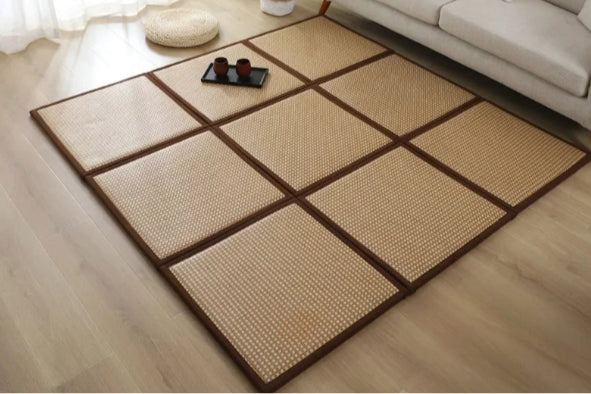
An emblematic floor covering in Japan, the tatami comes in the form of a rectangular module made of compacted rice straw and covered with a rush weave. This natural surface emits a slight vegetal odor. Used for centuries, tatami structures the interior space and serves as a unit of measurement to define room sizes. In traditional homes, it completely covers the floor and precisely delimits living areas.
Modern Japanese rug: What is it?
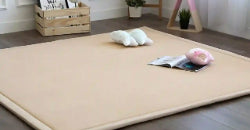
Modern Japanese rugs adopt certain visual codes of Japan while adapting to contemporary interiors. Unlike tatami, they do not structure the space or define the surface area of a room. Their role remains decorative and practical, providing comfort and style without imposing specific rules of use. These rugs come in patterns inspired by nature, traditional prints, or modern geometric shapes, offering great freedom to harmonize the colors and atmosphere of the room.
What differentiates a tatami and a modern Japanese rug?
Tatami and modern Japanese rugs share a common inspiration, but their functions and design diverge profoundly. Their origin, materials, and daily use reveal two distinct visions of interior design. To better understand these differences, several essential criteria deserve to be examined in detail.
Origin and tradition
The history of tatami is part of the evolution of ancient Japanese housing. Since the Heian period, these thick mats covered aristocratic residences. They then symbolized social status and refinement. Over time, tatami spread to more modest homes, becoming a central element of the Japanese house. It still structures traditional rooms today and accompanies cultural practices such as the tea ceremony or sleeping on a futon.
The modern Japanese rug has a very different origin. It does not stem from an ancient architectural tradition, but from a contemporary adaptation inspired by Japan. Its development responds to the growing interest in Japanese style in interior decoration. Unlike tatami, it carries no ritual value or heritage dimension. It is part of an aesthetic approach, intended to evoke the Japanese universe without reproducing its historical housing codes.
Materials and composition
In the differences between a tatami and a modern Japanese rug, materials play a central role. Traditional tatami is based on a compressed rice straw core, covered with a natural rush weave called igusa. This design gives it firmness, resistance, and moisture absorption capacity. Its dense structure also provides good thermal insulation. Each element is part of a craftsmanship passed down through generations, ensuring strength and longevity.
Conversely, the modern Japanese rug favors varied textiles and a more flexible manufacturing process. Its composition is more focused on immediate comfort and ease of maintenance. Generally, we find:
- wool;
- cotton; and
- synthetic fibers.
This diversity allows adaptation to different domestic uses. The choice of materials therefore influences the feel underfoot, the lifespan, and the maintenance of the covering.
Comfort and use
Comfort is a crucial criterion in the dissimilarities between a tatami and a modern Japanese rug. Tatami offers a firm and stable surface designed for sitting, meditating, or sleeping on a futon. This firmness supports the body and promotes an upright posture. It also contributes to a specific way of inhabiting space, closer to the floor. Tatami is not limited to a feeling underfoot. It influences daily habits and room organization. The modern Japanese rug favors a softer and more enveloping feel. Its thickness varies depending on the models, which reinforces the impression of immediate comfort. It usually accompanies a sofa, a coffee table, or an Western bed. Its use remains flexible, without modifying living practices. Where tatami structures gestures and postures, the modern Japanese rug complements existing furnishings by bringing warmth and softness to the floor.
Aesthetics and interior style
In a Japanese-inspired interior, tatami creates a sober and structured atmosphere. Its natural, slightly golden hue brings an immediate sense of authenticity. It transforms the perception of space by favoring simple lines and low furniture. The eye focuses on clear volumes and raw materials. This discreet presence enhances light wood, paper, and natural textiles. Tatami does not merely cover the floor. It influences the overall organization of the room and reinforces an impression of controlled calm.
On the other hand, the modern Japanese rug offers a freer approach to interior style. It easily integrates into a contemporary, Scandinavian, or minimalist living room. Its patterns inspired by Japanese nature create a decorative accent without transforming the architecture of the place. It can structure a relaxation corner or highlight a coffee table. This type of rug allows for the introduction of a measured Japanese touch, while maintaining classic Western furnishings. The choice between tatami and modern Japanese rug therefore depends on the desired level of aesthetic commitment in the space.
Why is tatami used in Japan?
The use of tatami in Japan is based on both practical and cultural reasons. This traditional covering insulates from the cold while allowing air to circulate. Its compressed straw structure slightly absorbs ambient humidity. This characteristic is perfectly suited to the Japanese climate, which is often humid in summer. Tatami also offers a flexible surface that cushions impacts and limits shocks. In a habitat where one sits and sleeps on the floor, this comfort becomes indispensable.
Beyond its material qualities, tatami organizes daily life. Standardized dimensions structure rooms and influence interior design. Inhabitants remove their shoes before entering, which preserves the cleanliness of the floor. This habit reinforces a respectful relationship with the domestic space.
Where to get tatami?

Source: Freepik
The purchase of an authentic tatami requires particular attention to the choice of supplier. Stores specializing in the Japanese way of life generally offer models imported from Japan, designed according to traditional methods. Specialized online platforms also provide a practical solution, provided you check the origin, the natural rush composition, and the density of the compressed straw core.
Large furniture stores sometimes sell tatami-inspired alternatives, but the quality varies significantly. For durable use, it is advisable to opt for a model with a natural igusa surface and a sufficiently firm structure. Some importers offer standard or custom sizes, facilitating integration into a bedroom or a dedicated relaxation area. Comparing technical specifications and carefully reading product descriptions helps to make an informed choice, consistent with a Japanese-inspired design project.