



































4 mistakes to avoid when wearing a Japanese women's kimono
The Japanese kimono fascinates with its elegance and the codes it imposes. However, this traditional garment requires more attention than a classic dress. Incorrect handling can quickly unbalance the outfit or detract from its refinement. In this review, discover the mistakes to avoid when wearing a women's Japanese kimono.
Women's Japanese kimono: what is it?
The women's Japanese kimono is a traditional garment emblematic of Japan. It is distinguished by its wide sleeves, straight cut, and fabric often adorned with refined patterns. Unlike Western clothing, it does not follow the body's curves but creates a fluid and vertical silhouette. This garment embodies a true aesthetic philosophy, based on balance, simplicity, and precision in details.
Today, the Japanese kimono for women comes in many variations, designed to adapt to different types of events. Some models are reserved for ceremonies, while others are perfectly suited for daily wear. Wearing it requires a certain rigor, particularly in the choice of accessories and the way it is adjusted. Even a minor error can break the overall harmony. Understanding its structure and codes is therefore essential to wear it with accuracy and elegance. To get a quality women's Japanese kimono, visit our collection to discover a variety of items.
Top 4 mistakes to avoid when wearing a women's Japanese kimono
Wearing a women's kimono requires precision and attention to detail to preserve its natural elegance. Certain errors, often subtle, can alter the balance of the outfit and detract from its overall appearance.
1. Choosing an inappropriate kimono size
Opting for an inappropriate size is a common mistake when it comes to wearing a women's Japanese kimono. A model that is too long drags on the floor and gives a sloppy appearance, even with carefully chosen accessories. Conversely, a kimono that is too short breaks the harmony of the silhouette and creates an unbalanced impression. The straight cut of the kimono requires a precise length, generally aligned with the ankles. This requirement ensures a neat and structured look, faithful to traditional codes.
The width also plays an essential role in the final look of the women's Japanese kimono. A garment that is too loose weighs down the silhouette and complicates the tying of the obi, while a model that is too tight restricts movement. The adjustment must allow the panels to overlap without excess fabric. A good size choice ensures a stable and elegant outfit, comparable to a perfectly tailored garment. This precision in proportions immediately enhances the overall aesthetic and flatters the wearer.
2. Incorrectly positioning the collar of the Japanese women's kimono
The positioning of the collar of the women's Japanese kimono influences the elegance of the outfit. A poorly adjusted collar can unbalance the ensemble and give a neglected appearance. Traditionally, the collar should be slightly open at the back of the neck to create a harmonious line. At the front, the panels must cross with precision, always in the correct direction, to respect the dress codes. A misalignment immediately draws attention and breaks the coherence of the silhouette. Certain errors frequently occur when adjusting the collar of the women's Japanese kimono. To ensure a neat look, it is necessary to avoid:
- sticking the collar too close to the nape of the neck and stiffening the outfit;
- crossing the panels in the wrong direction and creating a messy effect;
- leaving an irregular space at the front of the bust;
- neglecting the symmetrical adjustment between both sides.
A well-positioned collar provides a neat structure and enhances posture. This detail, often overlooked, nevertheless contributes significantly to the visual harmony of the Japanese kimono for women.
3. Incorrectly tying the obi and unbalancing the outfit
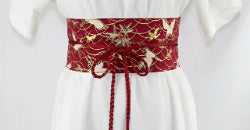
A precise tying of the obi can alter the overall appearance of a women's Japanese kimono. This belt structures the silhouette and holds the different layers of the garment. When it is poorly positioned, the entire ensemble looks disorganized and loses elegance. An obi that is too loose creates irregular folds, while excessive tightening restricts movement and stiffens posture. The balance relies on a proper adjustment, able to hold the kimono without deforming it. The position of the obi, usually at the waist or slightly higher, must remain consistent with the body shape.
The precision of the tying also plays a decisive role in visual harmony. An off-center knot draws attention and breaks the desired symmetry. The fabric must be smoothed carefully to avoid superfluous volumes and visible tensions. A correctly tied obi acts as a discreet structure that stabilizes the outfit without weighing it down. This mastery requires practice and constant attention to detail. By respecting these principles, the women's Japanese kimono maintains a neat and balanced appearance, suitable for all occasions.
4. Neglecting posture and gait when wearing a kimono
A neglected posture can compromise the elegance of a women's Japanese kimono, even if the garment is perfectly adjusted. This type of outfit naturally imposes a certain body posture, with a straight back and measured gestures. A relaxed gait gives a messy appearance and reduces the visual impact of the kimono. Conversely, a controlled posture immediately enhances the silhouette and reinforces the overall harmony of the outfit.
Wearing a Japanese kimono also influences gait and how one moves. Steps must remain short and controlled to preserve the balance of the garment. Abrupt or too fast movements risk dislodging the folds and disturbing the ensemble. By adopting a calm and consistent attitude, the kimono retains all its poise and fully reflects its traditional character.
How to care for a women's Japanese kimono?

Source: Freepik
Preserving a women's Japanese kimono requires regular attention and appropriate gestures. This delicate garment, often made from sensitive materials like silk, cannot withstand aggressive treatments. Improper care can alter the fibers, dull the patterns, or deform the cut. It is recommended to opt for gentle cleaning, done manually or by a qualified specialist. Drying should be done horizontally or on a thick hanger, avoiding any direct exposure to sunlight. Careful handling helps preserve the quality of the fabric.
Storage plays an essential role in the durability of the women's Japanese kimono. Precise folding prevents the formation of pronounced creases and protects the garment's structure. It is advisable to store the kimono in a dry place, protected from humidity and insects. Using a breathable cover limits the risk of deterioration. Careful care helps preserve your kimono for a long time, as well as maintaining its original elegance.
What can be added to a women's Japanese kimono?
The elegance of a women's Japanese kimono also depends on the choice of accompanying elements. Certain accessories complement the outfit while respecting its traditional style. The obi remains the central element, but other pieces subtly enhance the ensemble. Footwear, such as suitable sandals, provides a coherent finish. Specific socks also reinforce the authenticity of the outfit. Each addition must integrate naturally without weighing down the ensemble or distracting attention from the kimono.
To complement a women's Japanese kimono correctly, you should:
- opt for a structured obi that maintains the silhouette;
- choose traditional sandals appropriate for the occasion; and
- add a small, discreet bag to match the outfit.