
















[TEST – unpublished] Tanuki: the animal, the mischievous yōkai and the lucky statue
Round belly, straw hat and mischievous smile: it's impossible to visit Japan without coming across a tanuki statue in front of a restaurant or shop. A real animal, a mischievous spirit of folklore and a good-luck charm for businesses, the tanuki is one of the most endearing creatures in Japanese culture. Here is everything you need to know about it.
In brief
The tanuki (狸) is a wild animal of Japan, the Japanese raccoon dog, often mistakenly confused with the raccoon. In folklore, it is a cheerful and mischievous yōkai, capable of changing its appearance. Its Shigaraki ceramic statues, with their 8 symbols, are believed to bring prosperity to businesses.
Table of contents
The tanuki, a real animal
Before becoming a legend, the tanuki was an animal: the Japanese raccoon dog (Nyctereutes procyonoides), a small canid with a dark mask around its eyes. It lives in the forests and countryside of Japan, and sometimes ventures to the outskirts of cities. Its resemblance to the raccoon often leads to confusion in translations, but the two animals are completely unrelated.
| Tanuki (Japanese raccoon dog) | Raccoon | |
|---|---|---|
| Family | Canids (like the fox) | Procyonids |
| Origin | East Asia, including Japan | North America |
| Tail | Short and bushy, without rings | Long, with rings |
| Climbs trees | Rarely | Very well |
The tanuki of folklore: a mischievous yōkai
In Japanese tales, the tanuki is a yōkai, a supernatural creature, also called bake-danuki. It is renowned for its ability to change its appearance: by placing a leaf on its head, it transforms into a human, an object, or a monk to play tricks on travelers. More mischievous than evil, it loves sake, parties, and jokes.
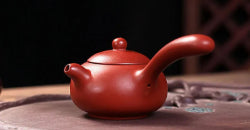
- Bunbuku chagama: a tanuki transformed into a teapot that eventually makes its fortune by putting on shows.
- Kachi-kachi yama: a tale in which the tanuki is a real rascal this time, punished by a rabbit.
- Pompoko: the Studio Ghibli film (1994), in which tanuki use their powers to defend their forest from property developers.

The tanuki is not the only fantastic creature in Japan: discover also Japanese urban legends and the shinigami, gods of death.
The tanuki statue and its 8 good-luck charms
The most famous tanuki statues come from Shigaraki, a pottery town near Kyoto. Placed at the entrances of restaurants, bars, and shops, they invite luck and customers. Every detail of the statue carries a message, known as the tanuki's "eight virtues":

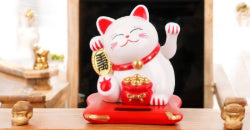
The tanuki plays the same role as the famous maneki-neko, the cat that raises its paw: attracting prosperity. Japanese shopkeepers also like to combine several good-luck charms.
Japanese good-luck charms


If tanuki are everywhere today, it is partly thanks to an emperor. In 1951, during Emperor Shōwa's visit to Shigaraki, the residents welcomed him with rows of ceramic tanuki holding small flags. The image made the rounds of the country, and the statue became the symbol of the town, which has been making them by the millions.
Where to place a tanuki statue?
The tradition is simple: the tanuki welcomes. It is therefore placed where visitors arrive, and thus where luck comes:
| Where? | Why? |
|---|---|
| At the entrance of the house | Facing the door or outwards, it welcomes visitors and attracts good fortune |
| In a shop, near the cash register or shop window | This is its original role: to attract customers and prosperity |
| In the garden or on a balcony | Ceramic models can withstand the outdoors; in Japan, they stand guard in front of houses |
| On a desk | A small tanuki for the success of projects and good cheer |
Tanuki and kitsune: Japan's two shapeshifters
| Tanuki | Kitsune (fox) | |
|---|---|---|
| Character | Cheerful, mischievous, bon vivant | Cunning, elegant, sometimes a messenger of the gods |
| Shapeshifting | For fun and to trick | Often into a beautiful woman |
| Symbol | Prosperity, business | Wisdom, protection (Inari shrines) |
The tanuki in Japanese language and cuisine
The tanuki is so deeply rooted in culture that it has made its way into expressions and even onto plates:
- Tanuki-neiri (狸寝入り), "the tanuki's sleep": pretending to sleep. The Japanese raccoon dog does indeed tend to play dead when it is afraid.
- Tanuki-oyaji, "old tanuki": a cunning and slightly rogue middle-aged man.
- Tanuki udon and tanuki soba: noodles in broth topped with tenkasu, crispy bits of tempura batter. Their "cousin", kitsune udon, is topped with fried tofu, the fox's favorite dish according to legend.
The tanuki in pop culture
The tanuki has largely left tales to invade screens:
- Pompoko (1994), by Isao Takahata for Studio Ghibli, remains the great film about tanuki and their transformation powers.
- Super Mario Bros. 3: the famous "Tanuki Suit" allows Mario to fly… and to turn into a statue, like a real bake-danuki.
- Animal Crossing: Tom Nook, the series' merchant, is a tanuki, which is no coincidence for a character obsessed with business!
Japanese good-luck charms
Omamori, maneki-neko and talismans to bring luck to your home.
View good-luck charmsFrequently asked questions about the tanuki
What is a tanuki?
It is the Japanese raccoon dog, a small wild canid of Japan. In folklore, it is also a mischievous yōkai capable of changing its appearance.
Is the tanuki a raccoon?
No. The tanuki is an Asian canid, while the raccoon is an American procyonid. They only resemble each other by their dark mask.
What does a tanuki statue mean?
It brings prosperity to a business. Its 8 details (hat, eyes, smile, sake, belly, ledger, tail, money bags) each symbolize a virtue.
Where should a tanuki statue be placed?
Traditionally at the entrance of a home, restaurant, or shop, facing outward to welcome luck and visitors.
Which movie is about tanuki?
“Pom Poko,” by Studio Ghibli, released in 1994, tells the story of a group of tanuki resisting urbanization.
What does tanuki mean in Japanese?
Tanuki (狸) is the Japanese name for the raccoon dog. By extension, it also refers to the mischievous yōkai and, informally, a cunning person.
Why does the tanuki statue carry a bottle of sake?
The bottle symbolizes the virtue and good fortune of always having something to drink and eat. The ledger he holds represents trust, the foundation of all business.
Is Tom Nook from Animal Crossing a tanuki?
Yes. In the Japanese version of the game, he is also called Tanukichi.