




















Japanese kimonos for women: how to incorporate them into a Western wardrobe

Source: Freepik
The kimono holds a central place in Japan's sartorial history. Once reserved for ceremonies or formal occasions, it now inspires contemporary fashion. How can a women's kimono be styled in a modern way? This review offers simple tips for adopting this iconic garment with modernity.
The Japanese women's kimono: what is it?
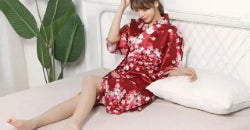
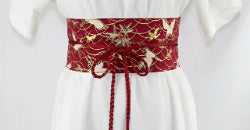
An iconic garment from Japan, the Japanese women's kimono holds an important place in the history of traditional costume. Its cut is distinguished by a straight shape and wide sleeves that gracefully envelop the body. This outfit is fastened by crossing the left panel over the right panel, then held in place by a wide belt called an obi. This outfit usually reaches the ankles and has a distinctive collar. In Japanese tradition, the kimono's shape is deliberately simple to adapt to different body types and allow for various ways of folding or adjusting it.
4 tips for incorporating the Japanese women's kimono into a Western wardrobe
Integrating a Japanese women's kimono into a Western outfit requires a balance between tradition and modernity. This piece adds an original touch while remaining elegant, provided the combinations are well-chosen. Here are some tips for adopting this garment in a modern wardrobe.
1. Choose a Japanese women's kimono adapted to a modern style
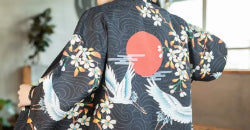
Contemporary models of Japanese women's kimonos are distinguished by their simplicity and practicality. Shorter or fitted cuts make it easier to integrate into a Western wardrobe, while retaining the typical fluid silhouette of the traditional garment. Lightweight fabrics like cotton or linen allow for natural elegance and optimal comfort, suitable for daily wear. The patterns should remain subtle with minimalist prints. This approach makes the kimono both elegant and versatile, ready to complement an outfit without overpowering it.
2. Pair the Japanese women's kimono with Western basics
In a contemporary wardrobe, certain simple pieces make it easier to integrate a Japanese women's kimono. Basic clothes provide a neutral base that highlights the kimono's patterns and loose fit. These combinations allow for a balanced outfit while letting the main piece stand out naturally. So, you can:
- combine straight-leg jeans with a subtly patterned kimono;
- pair simple trousers and a plain top for a refined look;
- wear the kimono over a minimalist dress for a flowing effect;
- choose neutral colors to maintain balance.
This approach simplifies the integration of the garment into daily looks while maintaining elegance and modernity. Western basics highlight the characteristic silhouette of the Japanese women's kimono without creating too stark a contrast. These combinations ensure maximum versatility. The ensemble creates a contemporary balance where each element complements the other naturally.
3. Wear the Japanese women's kimono as an elegant jacket
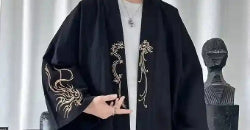
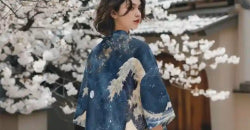
The Japanese women's kimono is perfectly suited for use similar to a light jacket. Its open cut allows it to be easily layered over simple outfits. This use highlights its loose silhouette while bringing elegance to every movement. The garment then becomes a structuring piece of the outfit, capable of adding style and originality without weighing down the overall look. The wide sleeves and open front create a subtle contrast with the more fitted cuts of Western basics, harmoniously balancing the silhouette.
This contemporary approach allows the Japanese women's kimono to adapt to the needs of daily life. Short or mid-length models are particularly practical and offer ideal freedom of movement. The traditional belt can be replaced by a thin ribbon or left open for a more casual effect.
4. Opt for colors that are easy to combine with your wardrobe
Color harmony plays an important role in integrating a Japanese women's kimono into a Western wardrobe. A thoughtful choice allows for balanced and easy-to-wear outfits for everyday life. Subdued tones often offer the best versatility. They easily pair with clothes already in the closet. Shades like black, beige, navy blue, or gray naturally integrate into different clothing styles. This type of palette simplifies combinations. The Japanese women's kimono thus retains its elegant character while remaining compatible with modern and timeless pieces.
Certain color combinations simplify the composition of an outfit around the Japanese women's kimono. It is necessary to:
- favor a kimono in neutral tones;
- pair a patterned kimono with plain clothes;
- choose a dominant color already present in the wardrobe;
- combine a colorful kimono with a simple outfit.
These principles help achieve coherent and elegant ensembles. The Japanese women's kimono thus becomes a piece capable of bringing a distinctive touch to a Western outfit.
Where to buy a Japanese women's kimono?

Source: Freepik
Several options are now available to purchase a quality Japanese women's kimono. Stores specializing in Japanese fashion often offer models inspired by traditional clothing. These brands generally select carefully crafted pieces that respect the ethical codes specific to the kimono. Some also offer modernized versions, better suited for daily use in a Western wardrobe. Stores dedicated to cultural clothing or artisanal items sometimes offer interesting collections. These places allow you to discover different materials, lengths, and patterns, while benefiting from a more authentic choice than in classic fashion circuits.
Online sales sites also represent a practical solution for finding a Japanese women's kimono. Many specialized boutiques feature a variety of models ranging from traditional pieces to revisited versions for a contemporary style. Independent designers sometimes offer kimono-inspired collections, made with modern fabrics and simplified cuts. This type of offer facilitates the integration of the garment into a Western wardrobe. Careful selection remains essential to prioritize the quality of fabrics, the precision of finishes, and adherence to the characteristic form of the Japanese women's kimono.