



















[TEST – unpublished] Yukata or kimono: what are the differences and which one should you choose?
They have the same T-shape, cross over the same side, and fasten with a belt: no wonder the yukata and kimono are often confused. Yet, in Japan, no one would wear them for the same occasion. Material, season, accessories, price: here are all the differences, for both women and men, and how to choose.
In short
The yukata is a kimono for summer, made of lightweight, unlined cotton, worn without special undergarments, with a thin belt and geta barefoot, for festivals and relaxing. The kimono is the traditional ceremonial garment, often made of silk and lined, worn over an under-kimono (juban), with a wide obi belt, zōri, and tabi socks.
Table of Contents
Yukata or kimono: differences at a glance

| Yukata | Kimono | |
|---|---|---|
| Material | Cotton, linen | Silk, wool, polyester |
| Lining | None | Often lined (except for summer) |
| Undergarments | Nothing special, or lightweight undergarments | Under-kimono (juban) with the white collar showing |
| Collar | Single collar | Two layered collars |
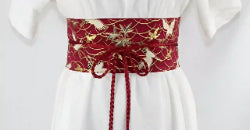
| Belt | Thin obi, often tied in a bow | Wide and stiff obi, elaborate knot |
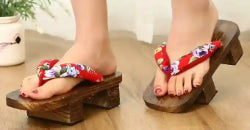
| Footwear | Geta, barefoot | Zōri with white tabi socks |
| Price in Japan | Affordable | Expensive to very expensive |

When to wear a yukata, when to wear a kimono?
- The yukata is worn from July to September: matsuri (neighborhood festivals), fireworks, summer evenings, a stay at a ryokan or at home.
- The kimono is worn for special occasions: weddings, coming-of-age ceremonies (seijin shiki), New Year's, tea ceremonies, shrine visits.
To accessorize it properly, discover our guide to Japanese geta and the shoes to wear with a kimono.
And for men?
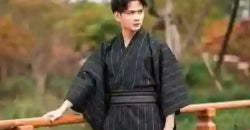
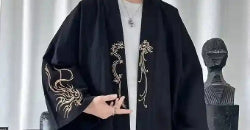
Men also wear both yukatas and kimonos. The men's yukata is distinguished by its sober colors (indigo, gray, black, stripes), its narrow belt tied at the hips rather than the waist, and the absence of a fold at the waist. For ceremonies, the men's kimono is completed with a haori jacket and hakama pleated trousers. And in summer, at home, many prefer the jinbei, an even more practical jacket-and-shorts set.
Our yukatas


How to wear a yukata in 5 steps
Good news: unlike the kimono, which often requires help, a yukata can be put on by yourself in a few minutes.
- 1Put on the yukata like a robe and hold both panels in front of you. The back seams should fall right down the center.
- 2Adjust the length: the bottom should just brush your ankles. For women, pull up the excess fabric at the waist; this fold is called the ohashori.
- 3Cross the right panel across your body, then fold the left panel over it.
- 4Secure it with a cord (koshi-himo) tied at the waist, then smooth the fabric to remove any creases.
- 5Tie the obi over it: in a bow at the back for women, or a simple knot at the hips for men.
Left over right: the golden rule
Whether you are wearing a yukata or a kimono, man or woman, the left panel always crosses over the right panel. The simplest way to check: you should be able to slide your right hand into the collar, like into a pocket.
The opposite way, right over left, is reserved for the deceased at funerals. It is the most common mistake among beginners, and the only one that would truly shock a Japanese person.
Wearing a yukata or kimono in France
Outside Japan, the rules are much more relaxed, and that is for the better. The yukata is perfect for a summer evening, a themed party, a manga convention, or simply relaxing at home as a chic robe. The kimono, on the other hand, makes an impression at a wedding, photo shoot, or cultural event.
When it comes to sizing, rely mainly on your height: a yukata is adjusted at the waist, so a little extra length can easily be accommodated, but a yukata that is too short cannot be lengthened. Check our size guide if in doubt.
Yukata or kimono: which one to choose?
| What you want | Our recommendation |
|---|---|
| Lightweight clothing for summer, at home, or at the beach | Cotton yukata |
| An outfit for a festival or themed party | Yukata with obi and geta |
| An elegant piece for a ceremony | Kimono with juban, obi, and zōri |
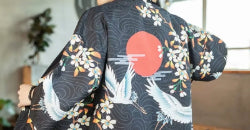
| An everyday Japanese look, with jeans | A kimono jacket or haori |
| A gift for a Japan lover | Yukata: easy to wear, without complicated accessories |
How to care for your yukata (and kimono)
| Cotton yukata | Silk kimono | |
|---|---|---|
| Washing | Machine wash at 30°C on a delicate cycle, or hand wash | Professional dry cleaning |
| Drying | Dry in the shade on a hanger to prevent color transfer | Air out on a wide hanger after each wear |
| Ironing | Medium heat, inside out | Low heat with a pressing cloth, or do not iron |
| Storage | Fold along the seams | Fold along the seams and store flat away from moisture |
Japanese clothing for men and women
Yukatas, kimonos, jackets and jinbei to embrace Japanese style.
View kimonos and yukatasFrequently Asked Questions
What is the difference between a kimono and a yukata?
A yukata is an unlined cotton summer kimono worn barefoot with geta. A kimono, often made of silk and lined, is worn year-round over a juban, with a wide obi, tabi and zōri.
Is a yukata a kimono?
Yes, it is a type of kimono: the lightest and most casual, reserved for summer.
Can you wear a yukata in winter?
Not outdoors: it is too light. However, you can wear it at home, possibly with a haori jacket over it.
What do you wear under a yukata?
Lightweight, discreet underwear, or a special fine undergarment (hadajuban). There is no need for a juban as with a kimono.
Can men and women wear yukatas?
Yes. A men's yukata is more understated, with a narrow belt worn low on the hips.
Which way is a yukata crossed?
Always with the left panel over the right, for both men and women. The opposite way is reserved for the deceased.
How do you choose the size of your yukata?
Based on your height: the hem should reach your ankles. A slightly long yukata can be adjusted to size, but a yukata that is too short cannot be adjusted.
Can you machine wash a yukata?
Yes, if it is cotton: at 30°C on a delicate cycle, then dry in the shade. A silk kimono should be taken to the dry cleaners.
You may also want to read