

















[TEST – unpublished] Japanese wok: origins, Japanese woks, and tips for choosing the right one
Is the wok Chinese or Japanese? Both, in a way. Born in China, it has become a common utensil in Japanese kitchens, where it goes by another name and is used to prepare very specific dishes. Here is its origin, how it differs from traditional Japanese pans, and our tips for choosing and maintaining it properly.
In short
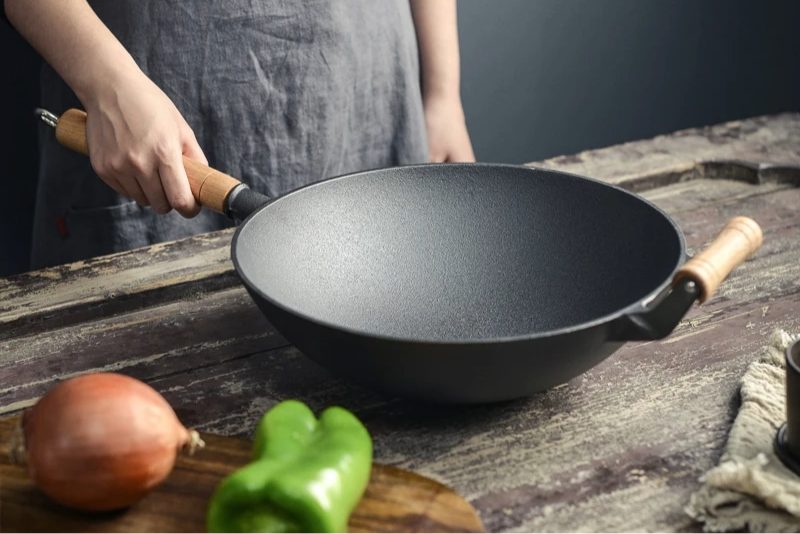
The wok comes from China. In Japan, it is called a chūka nabe (中華鍋), literally "Chinese pot," and is used for stir-fries, fried rice (chāhan), or yakisoba noodles. Japanese cuisine also uses pans of its own: the rectangular omelet pan and the takoyaki plate. A wok made of steel or cast iron must be seasoned before the first use.
Table of Contents
Where does the wok come from?
The wok originated in China more than two thousand years ago. Its name comes from Cantonese; in Mandarin, it is called guō. Its deep, rounded shape concentrates heat at the bottom and allows for very fast cooking over high heat by stirring constantly: an ideal technique when fuel was scarce. It is used for stir-frying, frying, braising, and even steaming.
Do the Japanese use the wok?
Yes. The wok arrived in Japan with Chinese cuisine, which is very popular in the archipelago under the name of chūka ryōri. It can be found in ramen restaurants and home kitchens for:
- Chāhan: Japanese-style fried rice, with egg and scallions.
- Yakisoba: stir-fried noodles with cabbage and a sweet-and-salty sauce.
- Stir-fried vegetables (yasai itame) and Chinese-style simmered dishes.
Hand-hammered iron woks made in Japan are also highly regarded by chefs for their lightness and responsiveness.

Quick recipe: chāhan, Japanese fried rice
This is THE dish to discover the wok in Japanese style: ready in 10 minutes, with leftovers. For 2 people: 2 bowls of cooked rice from the day before, 2 eggs, 2 scallions, 80 g of diced ham or pork, 1 tablespoon of soy sauce, salt, pepper, and a drizzle of neutral oil.
- 1Heat the wok over high heat until it smokes slightly, then add the oil.
- 2Pour in the beaten eggs and, before they set completely, add the rice, crushing it with the spatula to coat it well.
- 3Stir-fry for 2 to 3 minutes, stirring constantly, until the grains separate.
- 4Add the ham and scallions, salt and pepper, then pour the soy sauce over the hot edge of the wok to caramelize it.
- 5Serve in a dome: pack the rice into a bowl, then turn it over onto the plate.
The secret is cold rice: freshly cooked rice is too moist and sticks. Want other ideas? Discover our top 10 Japanese dishes.
Pans of Japanese cuisine

| Utensil | Shape | For cooking |
|---|---|---|
| Wok (chūka nabe) | Round and deep | Stir-fries, fried rice, noodles |
| Tamagoyaki-ki | Rectangular | Sweet rolled omelet (tamagoyaki) |
| Takoyaki-ki | Semi-spherical plate | Osaka octopus balls |
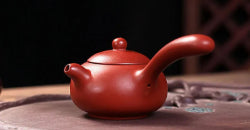
| Yukihira nabe | Small saucepan with pouring spout | Broths, miso soup, gentle cooking |
Wok and Japanese pans


How to choose the right wok?
| Material | Strengths | To know |
|---|---|---|
| Cast iron | Retains heat very well, even cooking | Heavy, heats up more slowly |
| Carbon steel | Light, heats up quickly, the chefs' choice | Must be seasoned and dried well |
| Stainless steel | Does not rust, dishwasher safe | Food sticks more easily |
| Non-stick | Easy for beginners | Does not withstand very high heat, wears out over time |
Also check compatibility with your stove: a wok with a flat bottom is suitable for induction and ceramic, while a round bottom requires a gas stove.
Which wok size to choose?
| Diameter | For how many people | Advice |
|---|---|---|
| 26 to 28 cm | 1 to 2 people | Easy to handle and store |
| 30 to 32 cm | 2 to 4 people | The most versatile size |
| 34 to 36 cm | 4 people and more | Requires a powerful heat source to heat properly |
A wok larger than your heat source heats poorly at the edges: it is better to choose a slightly smaller wok, heat it well, and cook in two batches.
Seasoning and maintaining your wok
- 1Wash the new wok with hot soapy water to remove the factory protective oil, then dry it.
- 2Heat it empty over high heat until the metal changes color slightly.
- 3Spread a thin layer of neutral oil with paper towels over the entire inner surface.
- 4Let it heat until the oil smokes, let it cool, then repeat 2 or 3 times.
- 5After each use, rinse with hot water without soap, dry over the heat, and oil lightly.
Has your wok rusted? Don't panic: scrub the rust off with steel wool, rinse, dry over heat, then season it again like a new wok. It will regain its patina in just a few uses.
The 5 mistakes to avoid with a wok
- 1Cooking in a wok that isn't hot enough: food will release its water and boil instead of searing. Wait until it smokes slightly.
- 2Overcrowding it: for more than two servings, cook in batches to maintain the temperature.
- 3Cutting ingredients into different sizes: they won't cook at the same time. Cut everything small and uniform before turning on the heat.
- 4Adding the sauce too early: it drops the temperature. Pour it in at the end.
- 5Using a metal spatula on a non-stick surface: opt for wood or silicone instead.
Frequently asked questions about woks
Is the wok Chinese or Japanese?
It is of Chinese origin. In Japan, it is called chūka nabe, the "Chinese pot," and is widely used in Chinese-Japanese cuisine.
Do Japanese people use woks?
Yes, especially for fried rice (chāhan), yakisoba and stir-fried vegetables, both at home and in ramen restaurants.
Which wok should I choose for induction?
A flat-bottomed cast iron or carbon steel wok that is induction-compatible.
How do you season a wok?
Heat it empty, add a thin layer of oil, heat until the oil smokes, let it cool, and repeat two or three times.
How do you clean a cast iron wok?
Wash with hot water, without soap or soaking, then dry over heat and apply a thin layer of oil.
What size wok should I choose?
A diameter of 30 to 32 cm is suitable for most households of 2 to 4 people.
What should I do if my wok has rusted?
Scrub the rust off with steel wool, rinse, dry over heat and season it again.
What is chāhan?
Japanese-style fried rice, prepared in a wok with leftover rice, eggs, scallions and soy sauce.